
What exactly is Gamification?
Gamification is the use of game-like elements—such as challenges, rewards, leaderboards and competition—in non game like environments.
Loyalty points is a classic example of gamification where spending money sometimes feels like a fun game like experience getting badges, stamps, prizes and other nudges along the way.
In our campaign for Just Eat we ‘gamified’ the restaurant sign up experience for sales teams by creating a fun app they could use to visualise the locations of target outlets and record their progress in a nice coloured coded badge like interface. We added a leaderboard to introduce some rivalry amongst sales teams and we added prizes and other fun nudges and rewards to keep people engaged and motivated to keep trying to sign up restaurants.
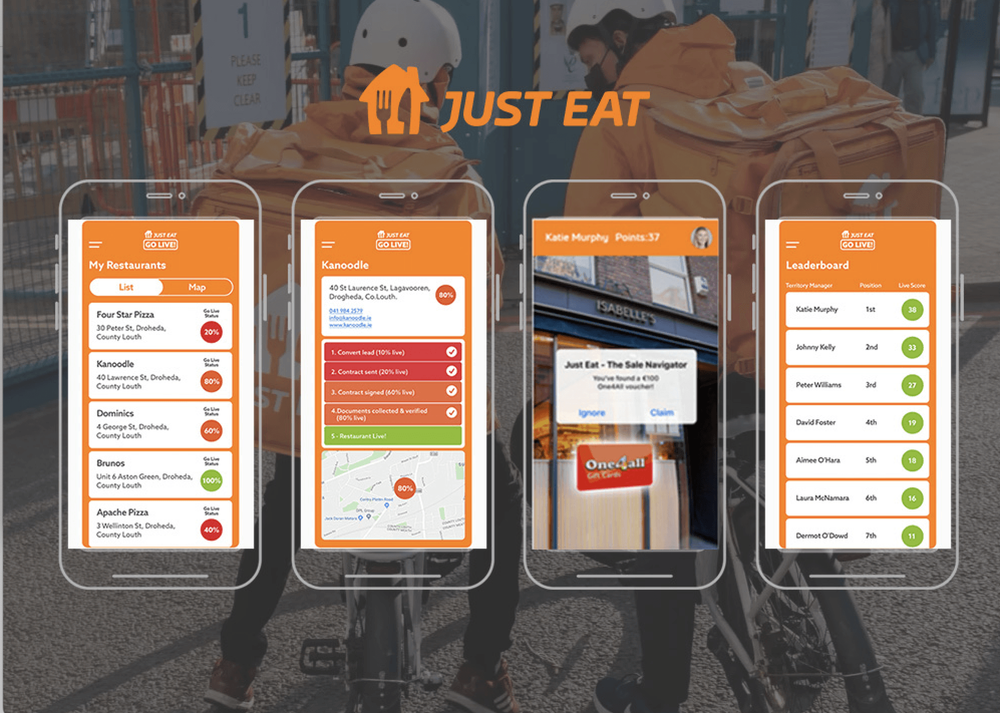
So as per the above example, the goal of gamification is essentially, to encourage participation, increase engagement, and keep people coming back over time.
By applying principles from psychology and game design, brands can create experiences that are fun, interactive, and more meaningful for consumers ( especially where you might want the
Examples of Gamified Promotions
Gamification can take many forms, including:
- Loyalty or collector mechanics
- Quizzes and trivia
- Leaderboards and rankings
- Points, badges, and level-ups
- Treasure hunts and mini-games
- Match prediction or bracket games
- Voting systems
- “Spin the wheel” or scratch card games
These experiences are usually accessed through email, social media, paid ads, product packaging, web links, and of course QR codes.
Real-world examples:
- Guinness Pint Predictor – Predict the outcome of a rugby game to win a pint
- KFC Bucket Challenge – An augmented reality treasure hunt with rewards
- McDonald’s Monopoly – Collect items for a chance to win prizes instantly
- Ladbrokes Spin the Wheel – Spin for instant rewards
Benefits of Gamified Promotions
Gamification offers several key advantages:
Cost-effective rewards
Not all rewards need to be physical—digital rewards like badges or levels can still be motivating while reducing costs.
Higher engagement – learning as play
Consumers actively participate or even become immersed in the experience and the experience doesn’t feel like hard work or being told how to do something.
Better brand recall
Interactive experiences are more memorable, which can improve brand awareness, purchase intent, and word of mouth.
Encourages repeat behaviour
Game mechanics like levels, badges, and rewards motivate users to return and play again.
Perceived value increases
When users “earn” rewards through effort or skill, they often value the experience more.
Key Elements of a Successful Gamification Campaign
Every campaign should start with clear objectives and a strong brief. Beyond that, here are important considerations:
- Brand fit
The experience should match the brand’s identity. For example, a premium brand may need something more sophisticated than a simple scratch card. - Player retention
Use features like leaderboards, challenges, and ongoing competitions to keep users engaged over time. - Re-engagement strategies
Notifications, email alerts, and level-up incentives can encourage users to return. Tying campaigns to real-world events can also boost activity. - Budget
Gamified campaigns can cost more than traditional promotions, but they often deliver stronger results. - Behavioural insights
Applying concepts like the RAMP model (Relatedness, Autonomy, Mastery, Purpose) can help drive deeper engagement. - Legal compliance
Campaigns must follow advertising rules—for example, avoiding child appeal or gambling-related elements where restricted.